
Your Remaining Teeth
We carefully evaluate whether your remaining teeth can be predictably restored or whether replacing them may provide a healthier, longer-lasting result.
Exploring Your Options
No two smiles—or treatment plans—are exactly alike. Whether you are dealing with failing teeth, extensive tooth loss, or years of dental problems, our team will help you understand your options and determine which path best fits your health, lifestyle, and long-term goals.
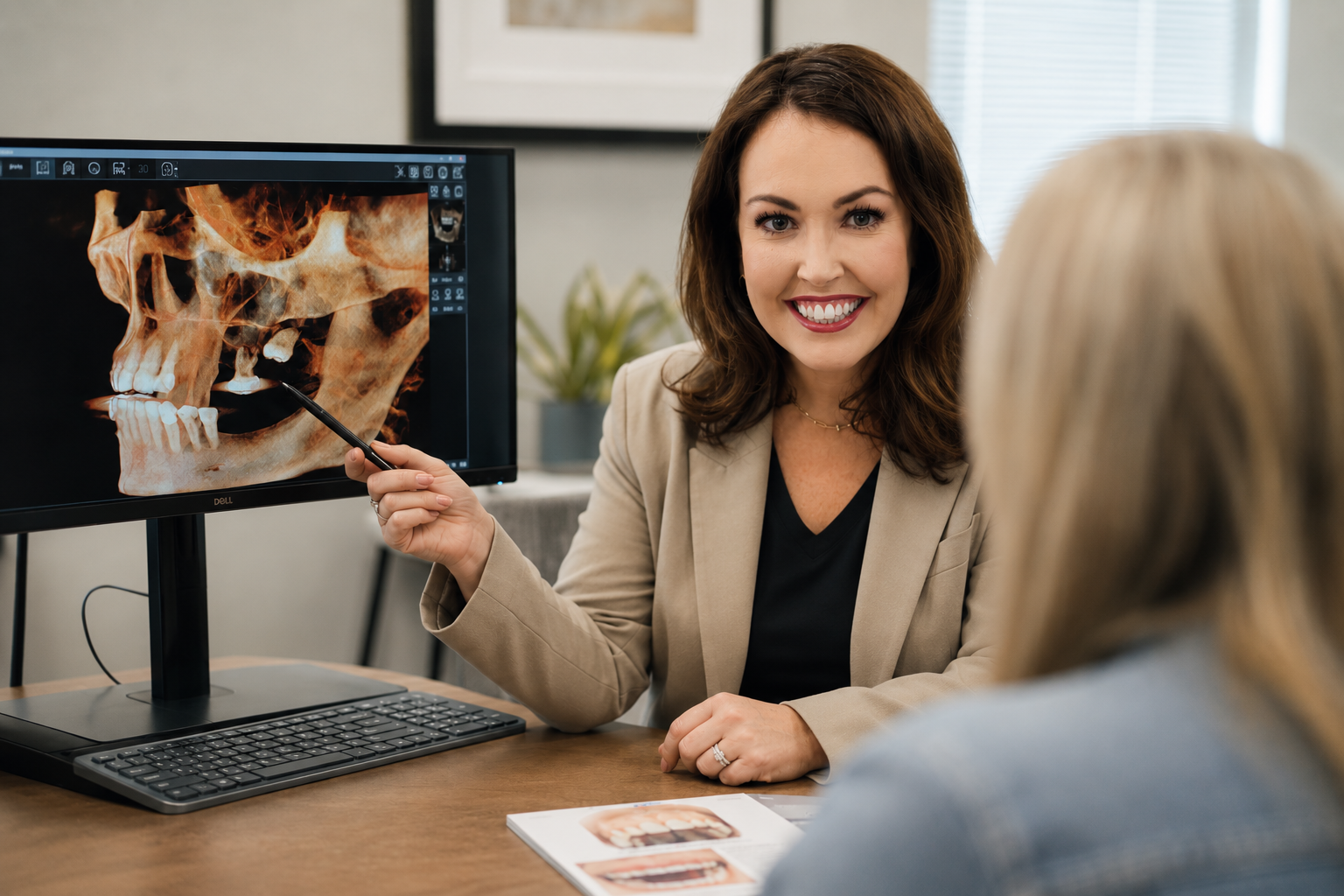
Every treatment plan is personally evaluated by Dr. Benjamin Simonton, a board-certified oral and maxillofacial surgeon, using advanced 3D imaging and a comprehensive clinical evaluation.
Personalized Treatment Planning
The best solution depends on more than how your smile looks today. Dr. Simonton considers your health, anatomy, concerns, and goals before recommending treatment.
We carefully evaluate whether your remaining teeth can be predictably restored or whether replacing them may provide a healthier, longer-lasting result.
Advanced 3D imaging allows us to assess bone volume, sinus position, nerves, and other anatomical details involved in implant planning.
Gum health, infection, previous dental work, medical history, and healing factors all help shape your recommended treatment plan.
We consider the foods you want to enjoy, the stability you need, your comfort concerns, and how you want your new smile to function.
Tooth shape, shade, facial proportions, and your personal preferences are considered when planning a smile that feels natural to you.
Understanding the Difference
Both restore missing teeth, but they differ significantly in comfort, stability, function, and how they feel in everyday life.
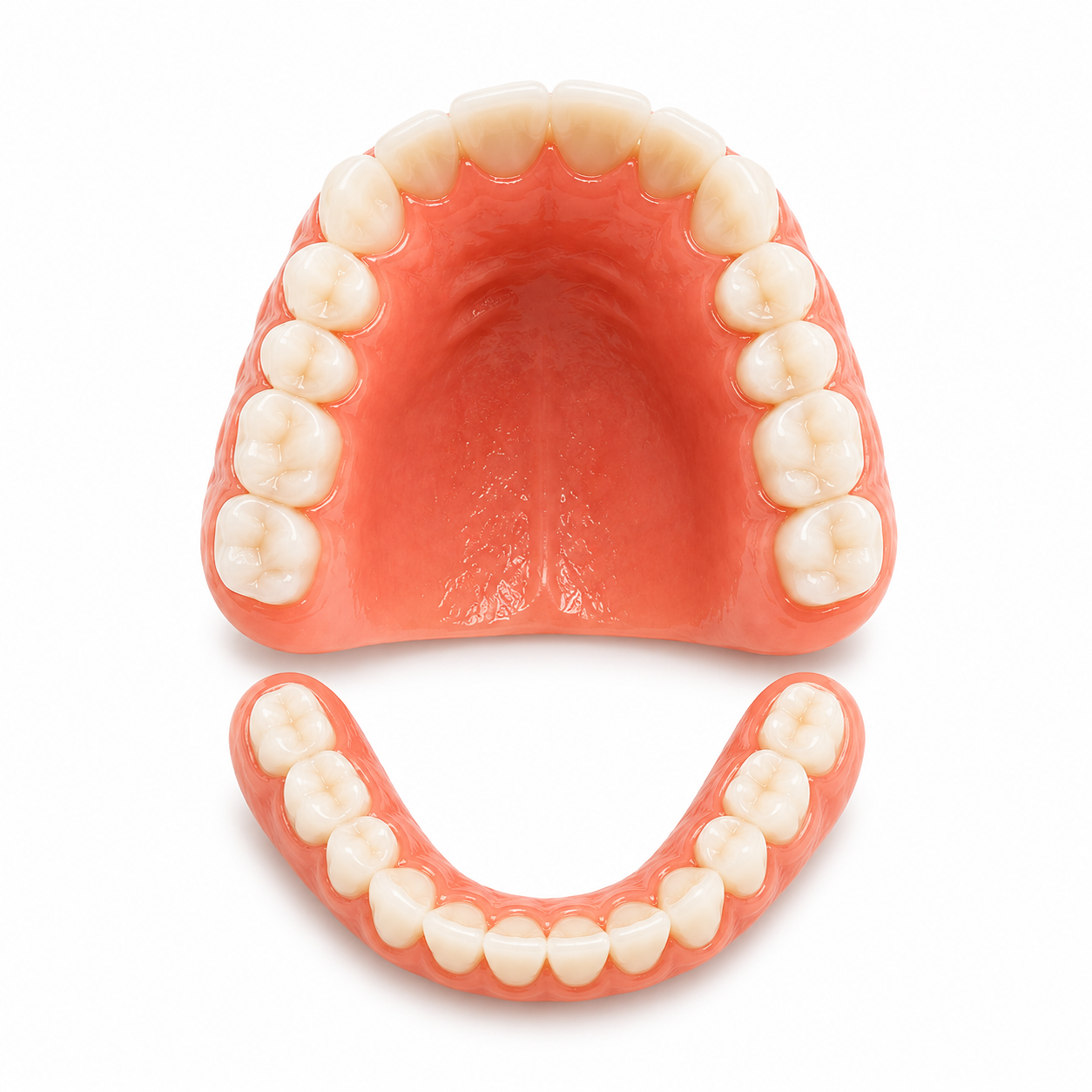
Traditional dentures rest on the gums and are removed each day. The upper denture typically covers the roof of the mouth, which may affect comfort, taste, and how natural the appliance feels.
The upper denture includes acrylic across the palate.
Dentures are taken out for cleaning and while sleeping.
Movement can occur while eating, speaking, or laughing.
Palate coverage may reduce taste and temperature sensation.
Adhesive may be needed to improve stability.
Bone volume may continue to decrease over time.
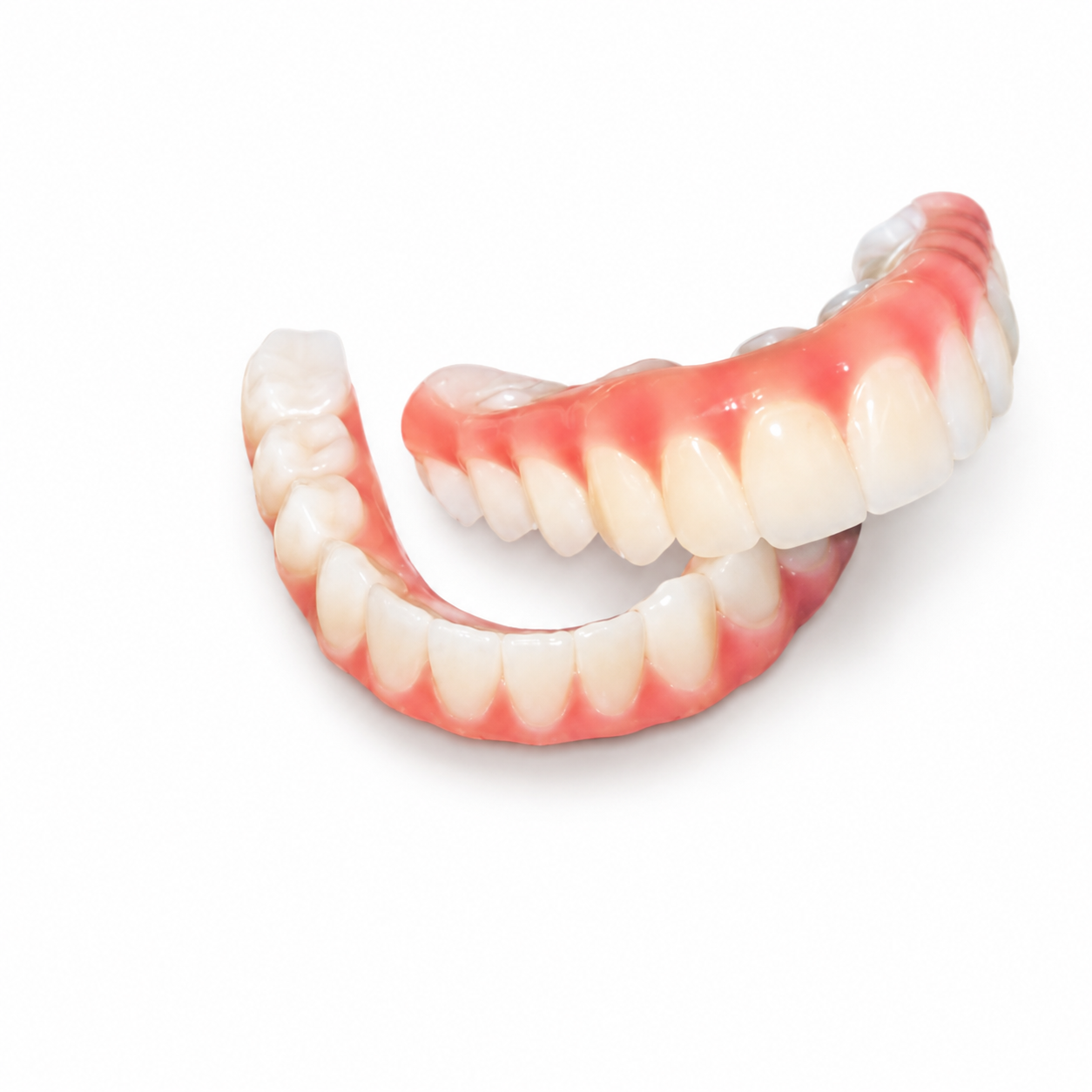
A custom full-arch bridge is securely attached to dental implants. It does not cover the roof of the mouth and remains fixed in place during normal daily life.
Nothing covers the roof of the mouth, allowing a more natural feel.
Only your doctor removes the bridge during scheduled maintenance.
The bridge is supported by dental implants rather than resting on the gums.
The open palate allows food and temperature to be experienced more naturally.
The bridge remains securely attached during everyday activities.
Dental implants provide stimulation that helps preserve bone.
Every smile is unique. Treatment recommendations depend on your oral health, medical history, bone anatomy, and clinical evaluation.
A Personalized Evaluation
You do not need to know which treatment you need before scheduling a consultation. That is what your evaluation is designed to determine.
Many patients who have been told they lack sufficient bone, have complex dental problems, or have struggled with dentures may still have options. Dr. Simonton evaluates each case individually and discusses what is realistically possible.
Request Your Consultation →You may be ready to explore treatment if:
You have several failing, loose, painful, or missing teeth.
You are tired of repeated dental repairs that do not seem to last.
You struggle to chew comfortably or avoid certain foods.
You feel self-conscious about your teeth or smile.
You currently wear dentures and want a more stable solution.
You want to understand whether fixed implant teeth are possible.
Your Next Step
A consultation is an opportunity to ask questions, review your imaging, understand your options, and receive a treatment recommendation based on your individual needs.
© Copyright 2026. LightUp Smile Center. All Rights Reserved.